
"tropical coffee regions"
4000 article(s) found

Dominica Coffee Flavor description, characteristics of Grinding, introduction to Fine Coffee
The earliest coffee in Dominica was introduced from Martinique (the overseas province of France), dating back to the early 18th century. Dominica is an island country with a tropical climate. The temperature changes little throughout the year. Except for the lower temperature in the Central Cordillera Mountains, which can reach less than 0 ℃ in winter, the annual average temperature in other areas is between 25 and 30 ℃, which is affected by the mountain topography.

A brief introduction to the treatment method of grinding degree and baking degree of bright sour Dominica boutique coffee beans
Dominica is an island country with a tropical climate, with little change in temperature throughout the year. Except for the lower temperature in the Central Cordillera Mountains, which can reach less than 0 ℃ in winter, the average annual temperature in other areas is between 25 and 30 ℃, while affected by the mountain topography, the north and east face the northeast trade wind, with an annual precipitation of 1500-2500 mm, which belongs to a tropical marine climate.

Brazilian Coffee Bean Brand recommends the mellow and balanced climate of the tropical prairie.
Professional Coffee knowledge Exchange more information on coffee beans Please follow the front street of Coffee Workshop (Wechat official account cafe_style)-Coffee Syrador Coffee in Brazil has been famous for many years, but how many people know that the residents of this land did not believe that coffee could be grown here? The world only envies God's generosity to Brazil, even if everything is lost during the day and God at night.

Tropical climate, introduction of Santa Ana Volcano region with different elevations of El Salvador coffee-producing countries
The civil war in the 1980s made many coffee farmers in war zones unwilling to spend agricultural fertilizer on coffee plantations, resulting in the fact of "organic planting". After the war, coffee plantations with organic cultivation were set up with the assistance of the government, and many of them obtained the Eco-ok certification of the Rainforest Alliance (Rain forest-Alliance). At present, 2000 hectares of coffee plantations have been organically certified.

Introduction of highland, tropical climate, acid red volcano Kenya coffee growing area
Kenya Coffee growing area Kenya's coffee producing areas are mainly concentrated in Mount Kenya (Mt. The plateau region represented by Kenya). Tropical climate, acid red volcanic soil provides a natural and suitable growth environment for coffee. The main producing areas are Nyeri and Ruiru in the middle of the country. The Kenyan coffee variety was originally brought to Kenya for cultivation by Bou.

A brief introduction to the flavor and flavor characteristics of Brazilian South Minas Coffee in Tropical Rain Forest region
At present, there are 2 million hectares of land in Brazil for growing coffee, the largest of which is Arabica. These beans will eventually be sent to large bakers in various countries, known as Sandos (in the name of the port of export santos, not the producing area). Because of the coffee competition after 2000, the quality of coffee beans produced in the high-altitude regions of the south was appreciated by its Minas.

Coffee Kingdom Brazil is located in Latin America in the Western Hemisphere.
Brazil is located in the Latin American region of the Western Hemisphere, located in the eastern part of South America and on the west coast of the Atlantic Ocean, bordering all countries on the South American continent except Ecuador and Chile; the vast majority of the territory lies between the equator and the Tropic of Cancer, is the most extensive tropical country in the world. The territory has a tropical rain forest climate and a tropical prairie climate. The superior tropical natural conditions are very suitable.
How's the Brazilian coffee? Brazilian coffee beans are suitable for people's choice of non-eosinophilia.
Professional coffee knowledge exchange more coffee bean information please follow the coffee workshop (Wechat official account cafe_style) Front Street-Brazilian Coffee introduction in 1727, Francis de Melo Pachta introduced coffee to Brazil from the port of Caybanquet. Today, Brazil has become the largest coffee producer in the world and occupies an important position in the whole boutique coffee industry. In Brazil

Honduran Coffee located in Tropical San Juan Chetol low Acid bourbon
Because Honduras is located in the tropics, the annual temperature change in San Juan Theodore is more than that.

A brief introduction to the origin, development, history and culture of Santo Domingo boutique coffee beans with intertwined aftertaste
Dominica coffee is mainly produced in areas such as Cibao in the Central Mountains, the Caribbean and Barahona. There are many large estates in Siwao, and coffee trees are planted with 75% Kaddura and 25% Tibica. In terms of varieties, Baraona is the region with a high proportion of Tibika seeds.
Brazil COE champion Notre Dame Light Manor Yellow bourbon sun 92 points tropical fruit flavor
For more information about coffee beans, please follow the front street of Coffee Workshop (official Wechat account cafe_style)-Bourbon Sunshine Manor of Notre Dame, Brazil, an overview of the manor and Honor Notre Dame Light Manor is located in the Minas Gerais region of Brazil, which produces the most boutique coffee. In 2013, the coffee grown at Notre Dame's Light Manor scored 92.22, with the highest score.

A brief introduction to the flavor, taste and aroma characteristics of Santo Domingo coffee beans with excellent acidity
Turning to the introduction of Dominican coffee, the most distinctive features are fresh and elegant, full of particles, excellent acidity and pleasant flavor (two colleagues agree with this). Coffee in Dominica varies slightly in taste according to the altitude of the region where it is grown, with sour but rich taste in the highlands, and less sour and smoother taste in the lowlands. And some Dominican villages

Introduction to the varieties of Dominica Santo Domingo Coffee with rich taste, taste and flavor description
The earliest coffee in Dominica was introduced from Martinique (the overseas province of France), dating back to the early 18th century. Dominica is an island country with a tropical climate. The temperature changes little throughout the year. Except for the lower temperature in the Central Cordillera Mountains, which can reach less than 0 ℃ in winter, the annual average temperature in other areas is between 25 and 30 ℃, which is affected by the mountain topography.

Characteristics of grindability of Dominica Santo Domingo Coffee with strong aroma introduction to taste treatment of varieties in producing areas
The earliest coffee in Dominica was introduced from Martinique (the overseas province of France), dating back to the early 18th century. Dominica is an island country with a tropical climate. The temperature changes little throughout the year. Except for the lower temperature in the Central Cordillera Mountains, which can reach less than 0 ℃ in winter, the annual average temperature in other areas is between 25 and 30 ℃, which is affected by the mountain topography.

Taste smooth Peruvian Coffee Flavor Manor characteristics of Organic Coffee Fine Coffee
The country is divided into 24 provinces and one directly affiliated region (Kaya). The names of the provinces are as follows: Amazon

Dominican Coffee Bean Flavor Taste Description Dominican Coffee Region Manor
Dominican ice is grown at 1,300 - 1,500 meters high in the country and in a tropical maritime climate. These farms use the height, humidity, temperature and soil of each valley to create premium coffee beans. Intense aroma, balanced taste, slightly citrus fruit, sucrose aroma, light floral, complex taste, sweet balance. Let people enjoy bright and fresh

Flavor description of Colombian Ramon Coffee beans introduction to the varieties of Regional treatment in Manor
The flavor description of Colombian Ramon coffee beans the variety of manor production area is mainly introduced the climate of tropical rain forest, the northern part is mainly tropical steppe and dry grassland, the precipitation here is gradually decreasing from south to north. There are still perennial high temperatures in large areas dominated by savanna climate, but not as much as in the south.

Grinding Calibration of washed Coffee beans in Honduras introduction to the Flavor description of the region produced by the Manor
This batch of Saint Rose treatment Plant (Beneficio Santa Rosa), a small cooperative of the local community, was established in 2005 with the support of a not-for-profit organization, TechnoServe, to provide production technology and eradicate poverty. This cooperative
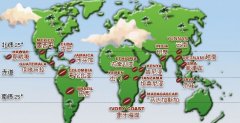
Introduction to the origin of coffee knowledge coffee
Coffee belt (coffee belt) coffee is mainly grown in tropical and subtropical regions, and coffee is mainly produced in more than 70 countries in the world. Most of them are distributed between 25 degrees of the Tropic of Cancer. According to the statistics of the Food and Agriculture Organization of the United Nations in 1976, coffee is grown in 76 countries and regions in the world, with an area of 118.845 million mu, of which Latin America is 64.86 million mu, accounting for the world's acreage.

Guatemala coffee with tropical rain forests, volcanic geology, plateau valleys and ever-changing microclimate
Guatemala is bordered by Mexico to the north, Honduras and El Salvador to the south, the Caribbean to the east and the Pacific Ocean to the west, surrounded by mountains and seas, with tropical rain forests, volcanic geology, plateau valleys and ever-changing microclimate. Agriculture is the main source of economy, and the main agricultural product is coffee. Guatemalan coffee once enjoyed a reputation as the best quality coffee in the world.